


Red Light Therapy for Muscle Recovery and Joint Pain: The Best Panels in 2026
Best red light panels for recovery and joint pain, at a glance
- Best full-body recovery: RLT Home Total Spectrum ULTRA, seven wavelengths including 1064nm, a 64-inch panel with electric stand included, $2,595 (code STILLPOINT10, drops to $2,439).
- Best for targeted areas: RLT Home Total Spectrum MAX, 360 LEDs, $1,595 (code STILLPOINT10, drops to $1,499).
- Closest full-body rival: PlatinumLED BioMax 900, the same seven-wavelength spectrum including 1060nm, stand sold separately, about $1,299 per panel (a full-body lie-down setup usually needs two).
- Value alternative: Mito MitoPRO 1500+, five wavelengths (no 1064nm), dual-chip, about $1,169.

The Recovery Problem: When Rest Is Not Enough
Whether someone logs hard miles on a trail, spends ten hours hunched at a standing desk, or wakes up most mornings with aching knees, the question is the same: how do you actually recover, not just rest? Ice baths help some people, compression gear helps others, and stretching is universally recommended but rarely sufficient on its own. In recent years, a quieter option has moved from professional sports facilities into home wellness routines: red light therapy and near-infrared light therapy, often grouped under the term photobiomodulation.
The appeal is straightforward. These panels emit specific wavelengths of light that are thought to interact with tissue at the cellular level, potentially reducing soreness, easing joint discomfort, and speeding the cycle between hard effort and readiness for more. Athletes recovering from strength sessions, runners with persistent knee pain, and office workers managing chronic stiffness have all become part of the growing audience for this technology. The question for anyone considering a panel is not just whether the science is promising, but which device is actually built for the depth of tissue that matters in muscle and joint recovery.
This review focuses on that narrower question. It covers what the research currently suggests, what panel specifications most directly relate to recovery and pain management, and which devices stand out in 2026 for anyone prioritizing those goals. For a deeper look at joint-specific concerns, the RLT Home joint pain guide is a useful companion resource.
How Red and Near-Infrared Light May Aid Recovery and Pain
The proposed mechanism behind photobiomodulation centers on the mitochondria, the organelles responsible for producing adenosine triphosphate (ATP), the energy currency cells use for repair, protein synthesis, and inflammation resolution. Research in this area suggests that certain wavelengths of red and near-infrared light are absorbed by a mitochondrial enzyme called cytochrome c oxidase, which may stimulate increased ATP production and reduce oxidative stress in stressed or damaged tissue.
The practical implication, if the mechanism holds under continued study, is that cells recovering from exercise-induced micro-damage or chronic inflammatory stress may function more efficiently when exposed to these wavelengths. Reduced inflammation, faster clearance of metabolic byproducts, and improved local circulation are among the effects that researchers have explored in this context.
Wavelength matters considerably here. Standard red light (around 630nm to 660nm) primarily interacts with tissue at or near the skin surface. Near-infrared wavelengths in the 810nm to 850nm range penetrate more deeply, reaching into muscle bellies and connective tissue. The deeper infrared band, around 1064nm, is where the physics become particularly relevant for joint and fascia work: at that wavelength, light is thought to reach structures that shorter wavelengths simply do not contact with meaningful intensity. For anyone whose goal is addressing pain in a knee joint, a hip, or deep muscle groups after heavy loading, the presence or absence of these deeper wavelengths in a panel is a meaningful specification, not a marketing detail.
What the Research Currently Shows
The evidence base for photobiomodulation in recovery and pain contexts is growing, though most researchers in the field emphasize that larger and more standardized trials are still needed. Two studies are worth noting for readers researching muscle recovery and joint pain specifically.
A randomized controlled trial published in Lasers in Medical Science (PubMed ID 31144070) examined photobiomodulation at approximately 808nm applied before exercise sessions in participants with knee osteoarthritis. The active treatment group showed significant reductions in pain scores on the WOMAC scale and gains in muscle strength compared to the placebo group. The study does not claim that light therapy cures or treats osteoarthritis, but the direction of the findings is relevant for people managing joint pain alongside physical activity.
A second study (PubMed ID 24338090) investigated photobiomodulation in fibromyalgia, a condition characterized by widespread deep-muscle and fascia pain. The research found that photobiomodulation helped reduce pain in participants. While fibromyalgia is a distinct condition from post-exercise soreness, the finding is relevant because it suggests the modality may reach and influence deeper tissue layers, which is precisely the argument for using longer wavelengths like 810nm, 830nm, and 1064nm rather than surface-level red light alone.
Neither study should be read as definitive proof that a home panel will produce identical results. Dosing, wavelength, and application protocols vary across the research landscape. What the studies do support is the general plausibility of the mechanism, particularly as it relates to deeper tissue and joint structures.
What to Look for in a Recovery and Pain Panel
Deep Wavelengths: 810nm, 830nm, and 1064nm
For muscle recovery and joint pain specifically, the presence of near-infrared wavelengths (810nm and 830nm) is important, and the inclusion of the 1064nm deep-infrared band is a meaningful differentiator in 2026. Most consumer panels include some near-infrared coverage, but the 1064nm band remains uncommon and is what allows light to potentially reach cartilage, fascia, and deep muscle rather than stopping in the dermis.
LED Quality and Power Delivery
Single-chip LEDs rated at 5W direct all of their output to one wavelength, which translates to more focused and consistent penetration compared to dual-chip designs that split power between two wavelengths in the same LED housing. For recovery applications where tissue depth matters, this distinction is more than theoretical.
Coverage Area and Full-Body Capability
Large muscle groups (hamstrings, glutes, the thoracolumbar fascia) need either a large panel or significant repositioning during a session. A full-body panel eliminates that problem. For people who want to address systemic fatigue rather than a single sore spot, coverage area is a primary specification.
Delivery Position
Lying down during a session rather than standing is often more practical for full-body recovery use, particularly for people with lower back or hip pain who find standing uncomfortable. Panels with electric motorized stands that can angle the light source for a reclined or fully horizontal user represent a significant usability advantage for this use case.
Preset Modes for Pain and Recovery
Panels that include prebuilt protocols for pain management and recovery, rather than requiring the user to configure everything manually, lower the barrier to consistent use, which matters because consistency is what determines whether any wellness practice produces results over time.
Top Picks for Muscle Recovery and Joint Pain in 2026
RLT Home Total Spectrum MAX: Best for Targeted Large-Area Recovery
The RLT Home Total Spectrum MAX is the mid-tier recommendation for people focused on specific body regions: the back, legs, or shoulders, for example, rather than full-body simultaneous coverage. With 360 single-chip 5W LEDs and all seven wavelengths from 480nm blue through to 1064nm deep infrared, it is one of the more comprehensively specified panels at this price point.
The seven wavelengths span 480nm (blue), 630nm and 660nm (red), 810nm, 830nm, and 850nm (near-infrared), and 1064nm (deep infrared). The panel includes nine prebuilt science-informed modes, a custom mode, and a pain and recovery preset among the built-in options. Pulsing runs from 0 to 5000Hz. EMF output is rated at near-zero, and the panel is FDA-registered. LED lifespan is rated at 100,000 hours.
What is included: the panel itself, a stand, two sets of eye protection, a free personalized weekly plan from the RLT Home science team, a 60-day risk-free trial, free insured shipping, a three-year warranty with no restocking fee, and HSA/FSA eligibility through Truemed.
Price: $1,595. Use code STILLPOINT10 for an additional 6 percent off, bringing the price to approximately $1,499.
RLT Home Total Spectrum ULTRA: Best Full-Body, Lie-Down Panel
The RLT Home Total Spectrum ULTRA is the primary recommendation for anyone whose recovery goals involve the whole body simultaneously. At 64 inches, it is long enough for most adults to lie beneath. The panel includes an electric motorized stand, which means a user can position it horizontally above a mat or bed without needing a separate accessory or a second person to help.
The RLT Home Total Spectrum ULTRA carries 480 single-chip 5W LEDs across the same seven-wavelength spectrum as the RLT Home Total Spectrum MAX. The multi-beam design operates at 15, 30, and 60-degree angles, allowing adjustment for distance and coverage preference. Voice control is included. The nine prebuilt modes plus custom mode, pain and recovery presets, pulsing range, near-zero EMF, and no-flicker specifications carry over from the RLT Home Total Spectrum MAX.
The full-body lie-down configuration is the distinguishing feature for recovery use. Athletes who want to treat hamstrings, glutes, lower back, and calves simultaneously without repositioning will find this more practical than a standing panel, particularly during the recovery window after a hard session.
Everything included with the RLT Home Total Spectrum MAX is also included here: two sets of eye protection, a personalized weekly plan from the RLT Home science team, a 60-day risk-free trial, free insured shipping, three-year warranty, no restocking fee, and HSA/FSA eligibility through Truemed. The electric motorized stand is included in the purchase price, not sold separately.
Price: $2,595. Use code STILLPOINT10 for an additional 6 percent off, bringing the price to approximately $2,439.
For those who want the largest available full-body format, the RLT Home Total Spectrum ELITE steps up to 864 LEDs at $4,495 (approximately $4,225 with code STILLPOINT10) and also includes an electric motorized stand. It is worth noting for serious users who want maximum coverage, though the RLT Home Total Spectrum ULTRA handles most full-body recovery applications effectively.
Browse the full panel lineup at the RLT Home panels shop.
Side-by-Side Comparison
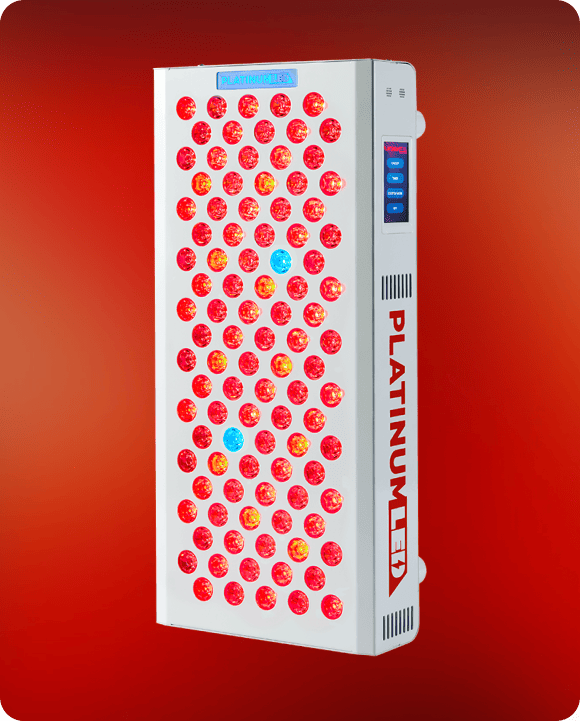
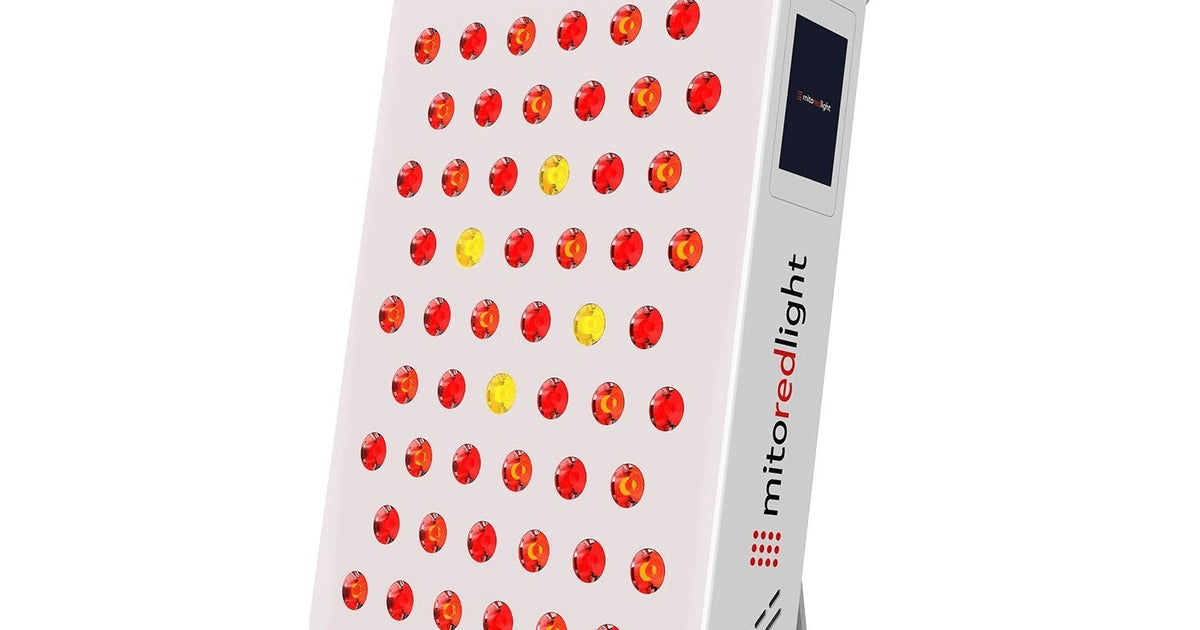
| Feature | RLT Home Total Spectrum ULTRA | PlatinumLED BioMax 900 | Mito MitoPRO 1500+ |
|---|---|---|---|
| Wavelengths | Seven: 480, 630, 660, 810, 830, 850, 1064nm | Seven: 480, 630, 660, 810, 830, 850, 1060nm | Five: 630, 660, 810, 830, 850nm |
| Deep infrared (around 1060 to 1064nm) | Yes (1064nm) | Yes (1060nm) | No |
| LED chip | Single-chip 5W (480 LEDs) | Single-chip | Dual-chip (TruDUAL) |
| Full-body lie-down | Yes, one 64-inch panel | Usually two panels needed | Multiple panels needed |
| Stand | Electric motorized, included | Sold separately | Sold separately |
| Representative price | $2,595 (code STILLPOINT10, $2,439) | about $1,299 per panel | about $1,169 |
An important correction on the spectrum: PlatinumLED’s BioMax line carries the full seven-wavelength spectrum, including deep-infrared light near 1060nm, so it is not lacking 1064nm-class penetration. Where the RLT Home Total Spectrum ULTRA pulls ahead for recovery is the practical setup. It is a single 64-inch panel that covers an adult lying down, with an electric motorized stand included, whereas a comparable full-body PlatinumLED lie-down configuration usually means two BioMax panels plus a separately sold stand. Mito’s MitoPRO line is strong value but tops out at 850nm, so it skips the deep-infrared band, and it uses a dual-chip design.
A note on the comparison: achieving a true full-body lie-down configuration with either PlatinumLED or Mito Red Light panels typically requires purchasing two panels plus a separately sold stand, which substantially changes the total cost and setup complexity. Both brands hold FDA registration as a device listing, the same category as RLT Home panels. If either markets products as “medical grade,” that language refers to the same registration category, not a higher regulatory clearance.
The Verdict
Winner, RLT Home Total Spectrum ULTRA: The strongest choice for recovery-focused buyers who want deep 1064nm penetration across the full wavelength spectrum, a 64-inch full-body panel that works in a lie-down configuration, an electric motorized stand included in the purchase price, nine prebuilt modes including pain and recovery presets, and a 60-day risk-free trial with no restocking fee. Use code STILLPOINT10 for an additional 6 percent off the listed price, bringing it to approximately $2,439.
Runner-up, Mito Red Light: A reasonable option for buyers who prefer a modular approach, building coverage incrementally across multiple smaller panels over time rather than committing to a single large panel upfront.
Runner-up, PlatinumLED: Worth considering for buyers who place weight on an established brand presence in the consumer red light therapy market and are comfortable sourcing a stand separately.
Neither runner-up is a poor choice in general terms. The decision ultimately rests on which specifications matter most for a given buyer’s recovery goals, budget, and living situation. For the specific combination of deep-tissue wavelength coverage, full-body lie-down capability, and trial period assurance, the RLT Home Total Spectrum ULTRA is the strongest all-in option in 2026.
Frequently Asked Questions
How soon after a workout should red light therapy be used for muscle recovery?
Many practitioners in this space suggest using a panel in the period shortly after exercise, sometimes called the recovery window, though the research does not yet point to a single universally agreed-upon timing protocol. Some users also find sessions helpful the following morning when delayed-onset muscle soreness tends to peak. Consistent use over several weeks appears more meaningful than the exact timing of any single session.
Is 1064nm deep infrared meaningful for joint pain, or is it mainly a marketing term?
The physics of light penetration through tissue suggest that longer wavelengths do reach deeper structures than shorter ones, which is why the 1064nm band is theoretically relevant for joint and fascia work rather than surface-level effects. Whether the clinical benefit at that depth matches what the physics suggests is still an area of active study. The existing research on photobiomodulation and joint pain (including the knee osteoarthritis trial noted above) used wavelengths in the 808nm range rather than 1064nm specifically, so direct comparative evidence at 1064nm in joint contexts is limited.
Can red light therapy panels be used for both muscle recovery and skin wellness?
Panels that include a full wavelength spectrum, from visible red at 630nm to 660nm through near-infrared at 810nm to 850nm and into deeper infrared at 1064nm, can theoretically address both surface-level and deeper-tissue applications in a single device. The shorter wavelengths interact primarily with skin and superficial tissue, while the longer wavelengths reach muscle and joint. A panel like the RLT Home Total Spectrum ULTRA, which spans all seven wavelengths including 480nm blue, covers both types of application, which is one reason the seven-wavelength design is increasingly common in higher-tier panels.
This article is general wellness information, not medical advice. Speak with a qualified healthcare provider before starting any new therapy.
© The Still Point – independent wellness device reviews